With Opened Bible
Holy Family
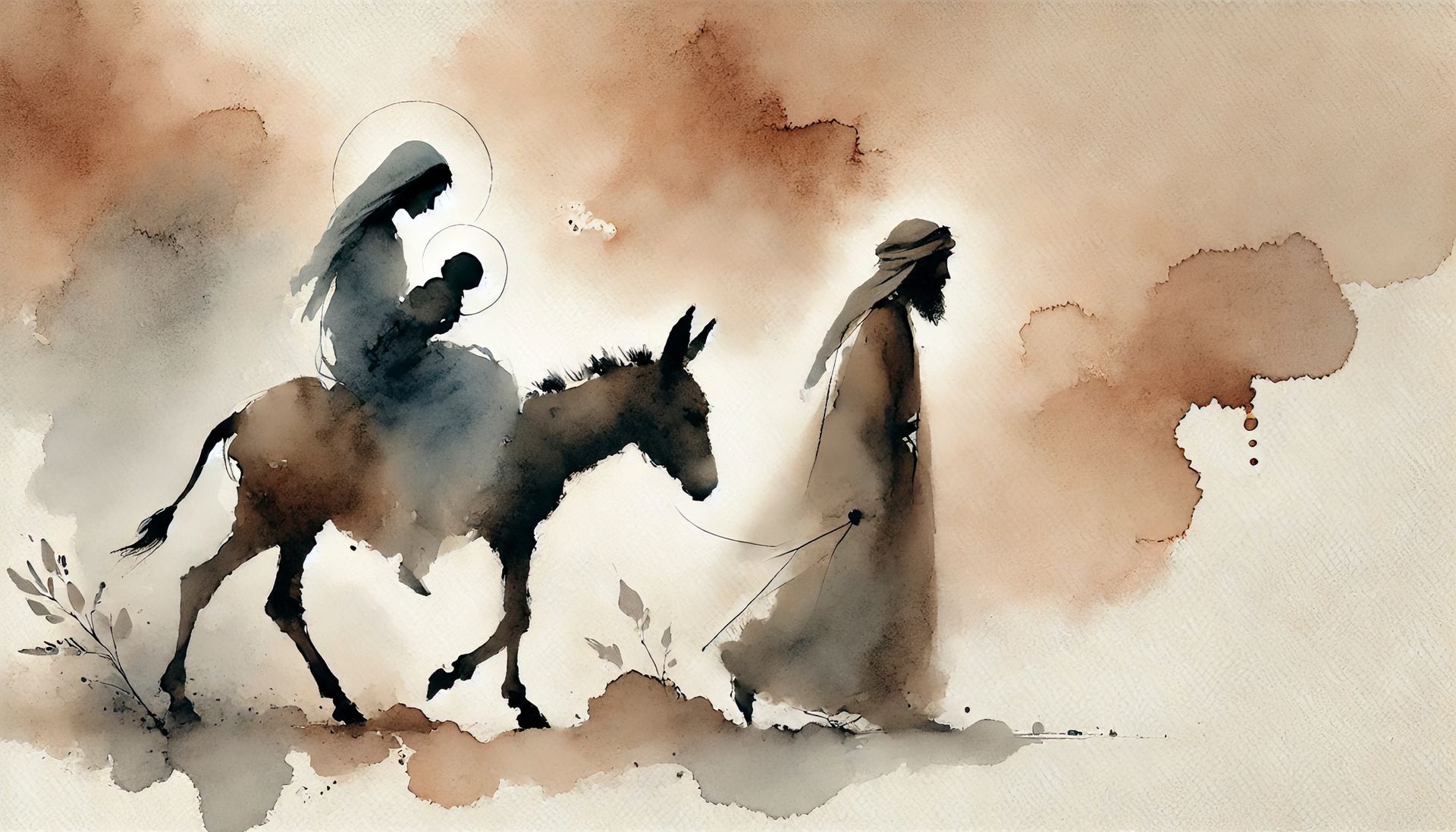
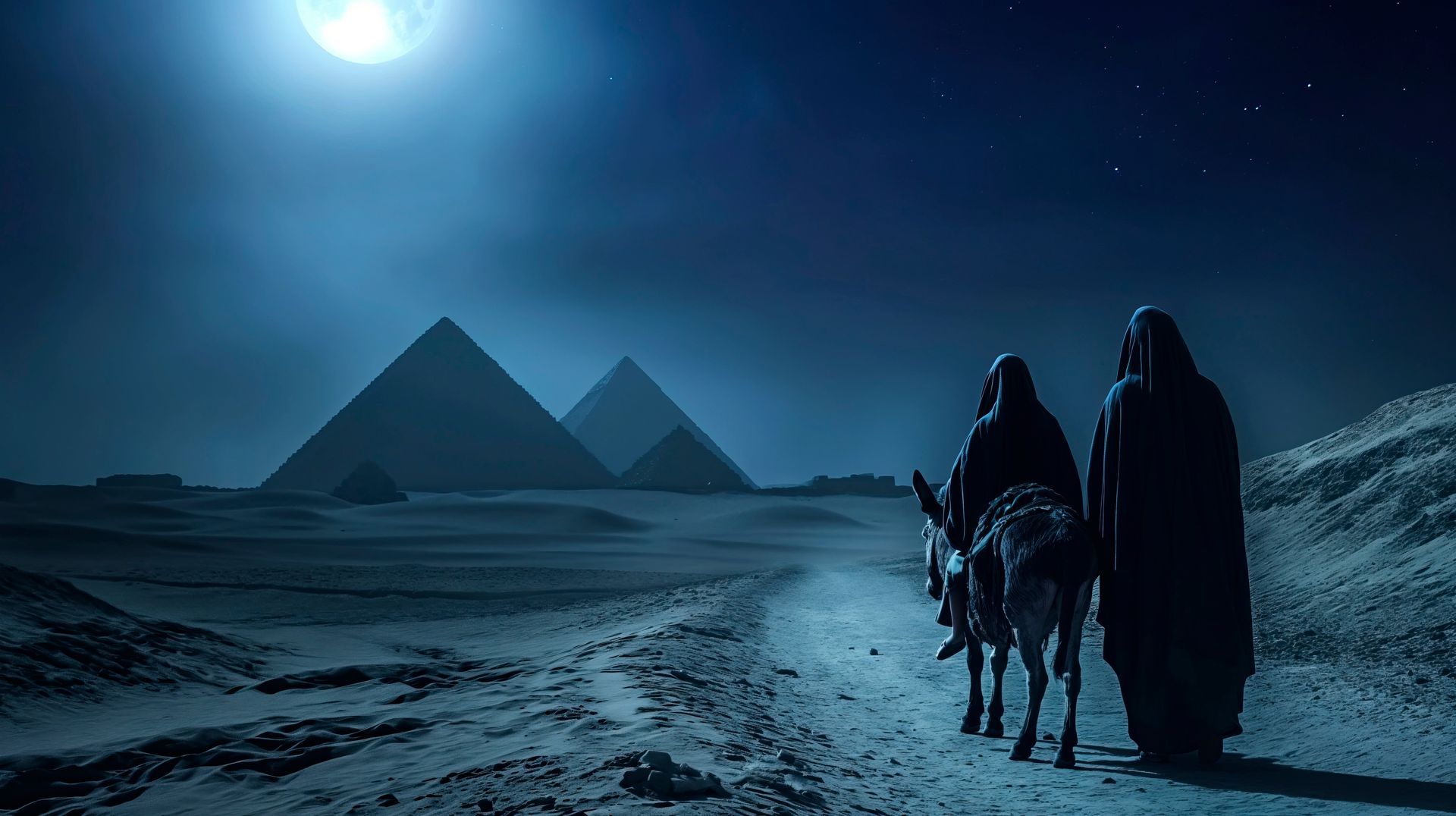
“Joseph rose and took the child and his mother by night and departed for Egypt.” (Matthieu 2, 13)
The entire history of the Bible, and of the Jewish people in particular, revolves around migration, exile, and the search for refuge and a better life, highlighting the biblical theme that spans generations. It all began with the fall of the first couple in the Garden, illustrating the start of humanity's journey in search of home and security. (Genesis 3:23-24)
Later, long after the flood, God chose a man, a Babylonian named Abram, and guided him to leave his country and family in search of a land of blessing. His migration began and led him to various countries and regions. (Cf. Genesis 12:1-40) He crossed the land of Shechem (Genesis 12:6), the mountain of Bethel (Genesis 12:8), camped in the Negev (Genesis 12:9), and finally arrived in Egypt (Genesis 12:10), trusting in God's plan at each step. After settling in Canaan, it was his grandson, Jacob (who would become Israel), who left his land and family in search of security and happiness. Fleeing the wrath of his brother Esau, Jacob went to the land of Aram to his uncle Laban and married his two daughters, Leah and Rachel. (Genesis 28:15; Hosea 12:13) A few years later, he returned home with his family and all that he possessed. (Genesis 31:8-13)
When famine struck Canaan, Jacob sent his sons to Egypt to buy grain. There, they discovered that their brother Joseph, whom they had previously sold into slavery, was alive. Jacob's entire family (70 people in total) went to Egypt in search of a better life and remained there for 430 years. (Genesis 46:1-3, 26; Exodus12:40)
After four centuries of servitude and suffering, God raised Moses to lead Israel on a pivotal journey to the promised land of Canaan, emphasizing the importance of migration as part of God's divine plan. Israel sojourned in the desert for 40 years, a period of testing and faith. (Exodus 13:18; Deuteronomy 8:2) Settled in Canaan and becoming strong through the establishment of the monarchy, Israel forgot the covenant and began to worship idols. God punished them by allowing them to fall into the hands of the Babylonians, who led them into exile. They remained there for 70 years. (2 Chronicles 36:20; Jeremiah 25:11-12)
At the dawn of salvation, the idea of migration continues its journey through the quest for truth of the Magi from the East (Matthew 2:1) and the family of Nazareth. Joseph took his wife and the child and fled to Egypt. (Matthew 2:13) The Church of Christ is a pilgrim family, living and witnessing to Christ, Light and Life on earth, yet continually in search of the celestial city above, illustrating the ongoing spiritual journey rooted in biblical migration themes. (Philippians 3:13-14) The idea of migration is fundamental in the Holy Scriptures, but it also shows that family and faith are vital in life's journey. The family, the domestic church (to use the words of Saint John Paul II), is where God's presence becomes real and comforting for us.