With Opened Bible
Sixth Sunday of Easter

“Then they laid hands on them and they received the Holy Spirit.” (Acts 8,17)
The Bible teaches us many spiritual truths of eternal significance. One of these is the laying on of hands, a meaningful practice that connects us to our faith's deep roots. In the first reading for this 6th Sunday, we see Philip—one of the seven deacons—proclaiming the Good News to the Samaritans. The Apostles, having arrived from Jerusalem, laid their hands upon the newly baptized to confirm their faith through the power of the Holy Spirit (Acts 8:17). Let us remem-ber that the "laying on of hands" can carry multiple meanings. Let us examine this more closely.
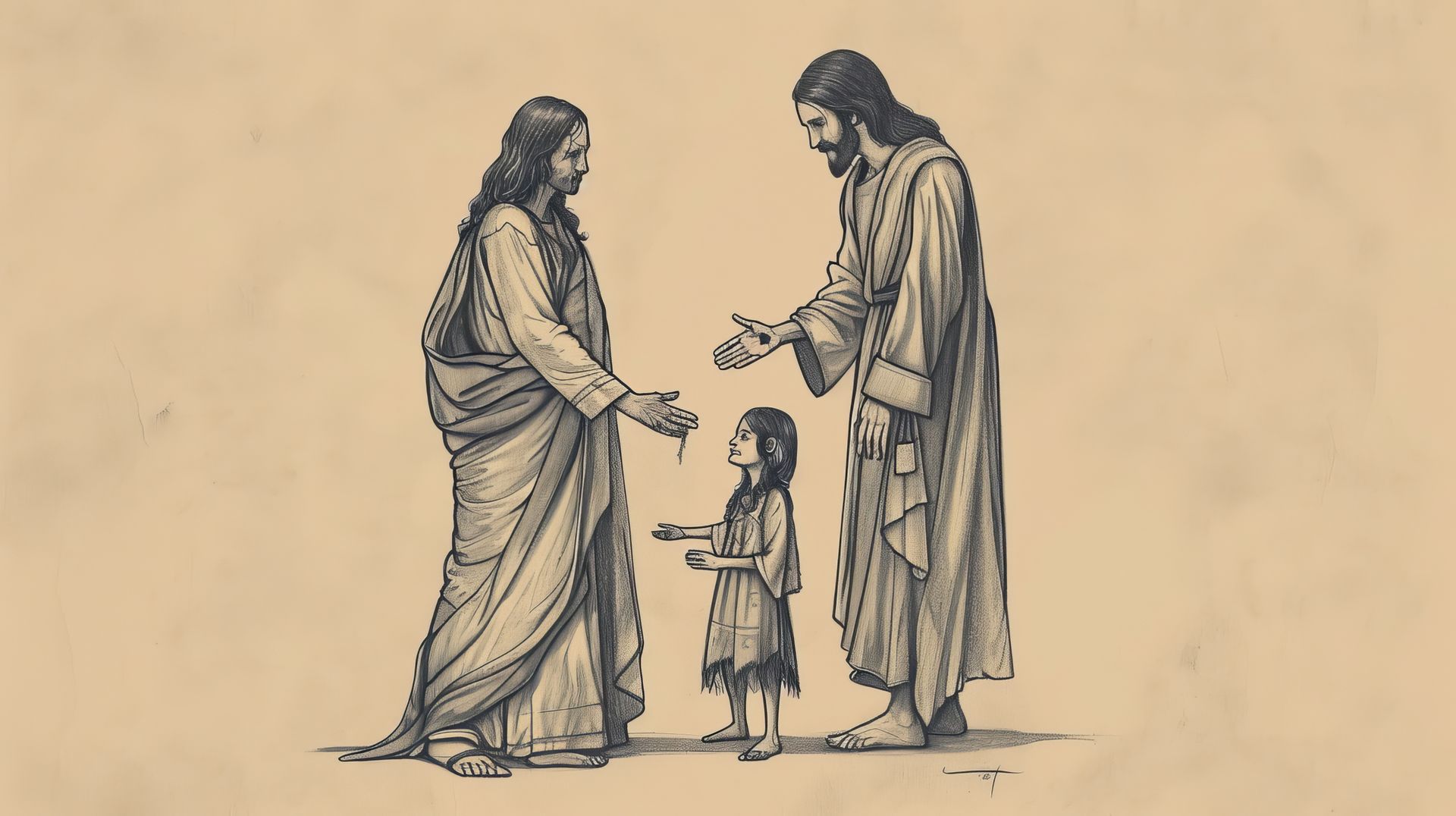
Hands are laid on to bless: Jacob blessed Joseph's sons, Ephraim and Manasseh (Genesis 48:13–14); Aaron the High Priest and his sons laid their hands upon the offerings (Leviticus 1:4; Numbers 8:10); Jesus did the same for little children (Matthew 19:13–15) and for the Apostles at the time of the Ascension (Luke 24:50–53); the faithful laid their hands upon Paul and Barnabas to bless them before their missionary journey (Acts 13:1–3); hands are laid on to con-secrate an animal for the service of God (as an offering)—a rite that accompanied the anointing for the consecration of priests and the High Priest (Leviticus 8:18); hands are laid on to ordain and conse-crate one chosen for the service of God or of the people (Moses laid his hands upon Joshua to appoint him as his successor— (Numbers 27:18–22); the Apostles laid their hands upon the 'Seven' to ordain and consecrate them for the diaconate—the service of the poor—Acts 6:6).
Likewise, Ananias laid his hands upon Saul to confirm him in the Holy Spirit (Acts 9:10–18). Timothy was to lay hands upon men of integrity chosen for ministry (priests and bishops) (1 Timothy 4:14; 2 Timothy 1:6). Hands were laid upon the sick as a sign of both spiritu-al comfort and healing (Mark 6:5; 16:18; Luke 4:40; 13:13; Acts 28:8). Finally, the laying on of hands was also a gesture of comfort and consolation, as seen when Christ's hand was laid on the Fearful (Revelation 1:17). This variety shows its deep significance in Scrip-ture and tradition.
Even today, the Church—following in the footsteps of the Apostles—continues to lay on hands to bless, console, forgive, and consecrate. This enduring practice aims to deepen our trust in God's ongoing work through the Holy Spirit, who sanctifies and guides the Church.