With Opened Bible
15th Sunday in Ordinary Time

“My word shall not return to me void,
but shall do my will,
achieving the end for which I sent it.” (Isaiah 55, 11)
With this Sunday's first reading, we are invited to delve once more into the Scriptures to discover the meaning of the Word of God presented to us. The prophet Isaiah lived seven hundred years before Jesus Christ. He prophesied His miraculous birth of a virgin, as well as His suffering and death. And it is He who, even today, reveals His missionary path to us through this declaration: "My word shall not return to me void, but shall do my will, achieving the end for which I sent it." When we hear this Word (in connection with the Parable of the Sower), we might quickly assume it refers to agriculture or rapid spiritual growth.
However, by digging the Holy Scriptures, we can gain a new under-standing. Isaiah used special word. In Hebrew, this Word is *dabar*. This *dabar* (Word) is more than just a transmitted sound; it is an active, effective power. It is *Dabar Adonai*—the Word of God (Isaiah 55:11). This *dabar* (Word) was present at the beginning of all things. Everything was created through Him, in Him, and for Him, as Saint Paul tells us (cf. Colossians 1:15–17). Yet the author of Genesis confirmed this long before Paul: "In the beginning, God said..." (Genesis 1:3, 6, 9, 11). Saint John reminds us that this Word (*Dabar Adonai*) was with God and was God (John 1:1). Finally, this *Dabar* (Word) became flesh in Jesus Christ (John 1). He received a body to be offered as a sacrifice for the salvation of the world (Hebrews 10:5, 7). By saying "yes" to the Father's will, Jesus the Incarnate Word—fulfills Isaiah's prophecy in His own person. Having accomplished what God had ordained, He returned to the Father in glory (cf. Mark 16:19).
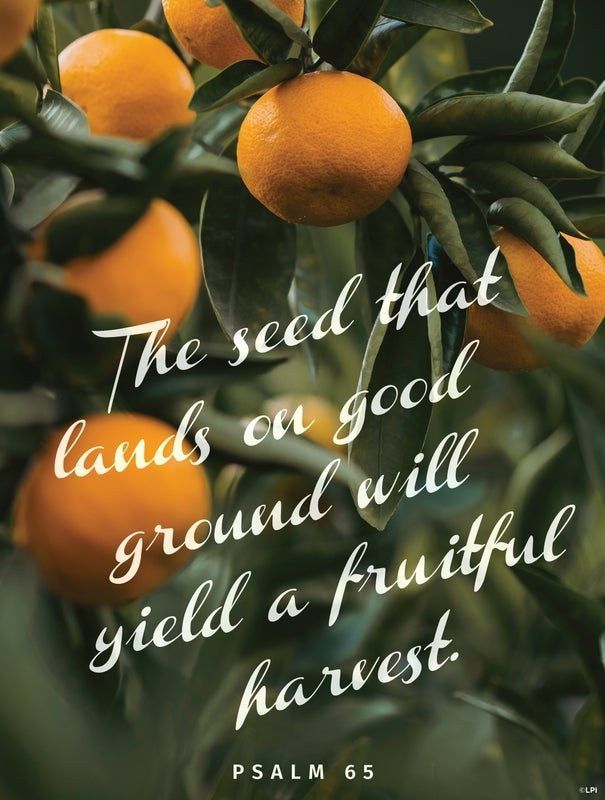
The Word of God (Jesus) invites us to receive, in the soil of our hearts, the seed of the Gospel—a seed that can sprout and cause us to bear fruit that endures unto eternal life.